
Living with a disability should not limit a person’s ability to pursue personal goals, develop new skills, or participate fully in the community. A professional disability support provider plays an important role in helping individuals work towards long-term goals by offering personalised assistance, encouragement, and practical support. Whether the goal is becoming more independent, improving daily living skills, building confidence, or increasing community involvement, the right support provider can help create a pathway towards greater choice and control.
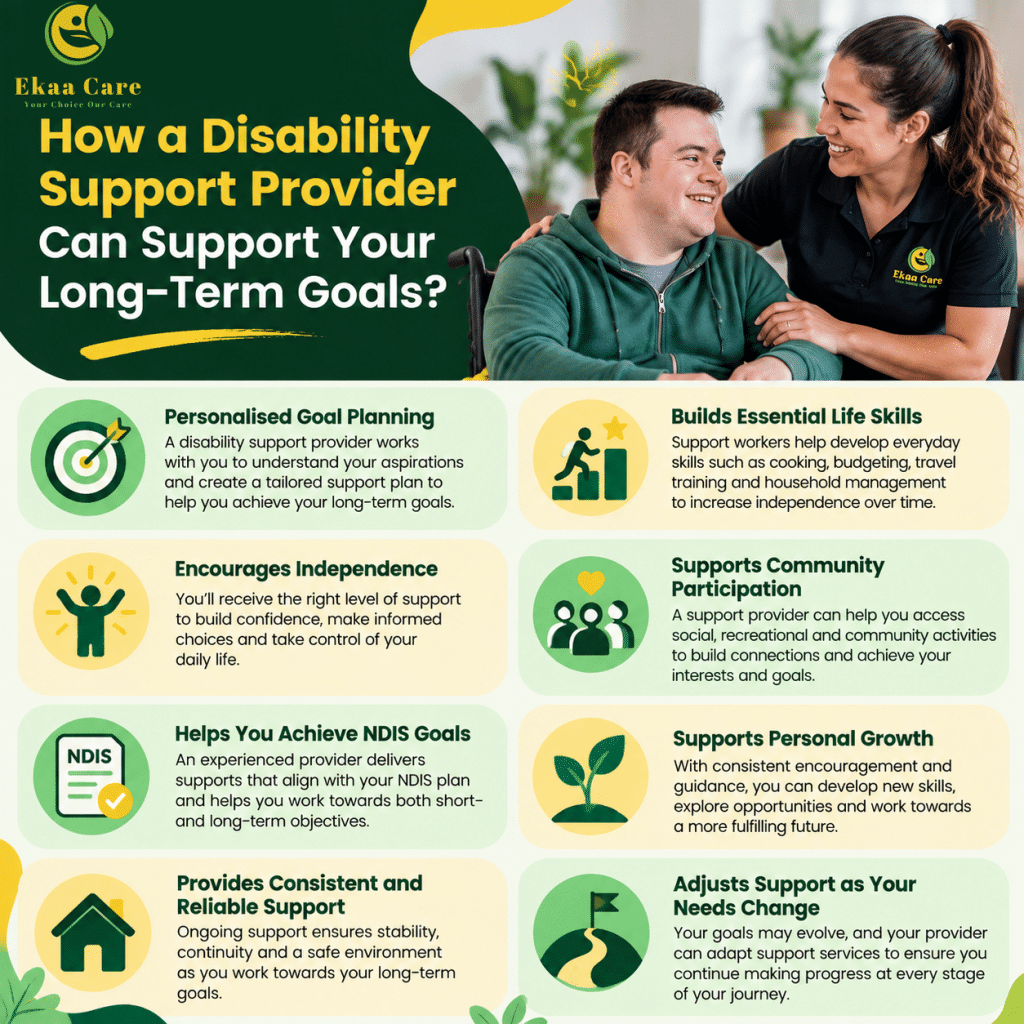
Creating Personalised Support Plans
Every individual has different needs, preferences, and aspirations. A quality disability support provider in Sydney begins by understanding each person’s goals and creating a personalised support plan that aligns with their lifestyle and future objectives.
These plans may include support with everyday activities, communication, mobility, social participation, skill development, and personal care. By focusing on individual strengths and abilities, support providers help participants take meaningful steps towards achieving their goals while maintaining independence.
Developing Skills for Greater Independence
One of the key ways a disability support provider supports long-term goals is by helping individuals build essential life skills. Support workers can assist participants with tasks such as meal preparation, household management, budgeting, travel planning, and accessing community services.
Over time, these skills can increase confidence and allow individuals to take more control over their daily routines. A supportive approach encourages participants to learn at their own pace while receiving guidance whenever needed.
Supporting NDIS Goals and Personal Growth
For many participants, working with an experienced NDIS support provider in Sydney can make a significant difference in achieving the goals outlined in their NDIS plan. NDIS support providers help participants access suitable services and supports that align with their personal objectives.
From improving independence to strengthening social connections, the right provider focuses on delivering flexible support that evolves as a person’s needs and goals change.
Encouraging Community Participation and Social Connections
Long-term wellbeing involves more than daily assistance as it also includes building relationships, exploring interests, and participating in community activities. A disability support provider can help individuals engage in social, recreational, educational, and employment opportunities.
For those looking for a trusted disability support provider in Sydney, personalised community support can help create opportunities for meaningful participation and greater confidence in everyday life.
Providing Consistent and Reliable Support
Achieving long-term goals often requires ongoing encouragement and consistent assistance. A reliable disability support provider builds trust by offering dependable services, respecting individual choices, and adapting support as circumstances change. With the right support network, individuals can continue progressing towards their goals while maintaining dignity, independence, and control over their decisions.
A disability support provider can be a valuable partner in helping individuals achieve long-term goals through personalised care, skill development, and meaningful support. By focusing on independence, choice, and individual aspirations, disability support services empower people to create a more confident and fulfilling future. If you are looking for compassionate and personalised disability support services, Ekaa Care is here to help you achieve your goals with tailored NDIS support solutions.
Book An Appointment Today
Contact Ekaa Care today to learn how our dedicated support team can assist you on your journey towards greater independence and wellbeing.
Call us at 1300 65 85 75 or email us at info@ekaacare.com.au for more information.
Can a disability support provider create a personalised support plan?
Yes. A disability support provider develops personalised support plans by understanding an individual’s goals, preferences, lifestyle, and support requirements. These plans are designed to provide the right level of assistance while encouraging choice, control, and independence.
How does a disability support provider help improve independence?
A disability support provider helps individuals develop important life skills such as cooking, household management, communication, budgeting, and accessing community services. Over time, these skills can help participants become more confident and manage daily tasks more independently.
Can a disability support provider assist with NDIS goals?
Yes. An experienced disability support provider can help NDIS participants work towards the goals outlined in their NDIS plans. They provide suitable support services that align with personal objectives, whether those goals involve independence, social participation, skill development, or wellbeing.
What types of support can a disability support provider offer?
A disability support provider may offer assistance with personal care, daily living activities, community access, social engagement, transport support, skill-building activities, and other services based on individual needs and approved NDIS support.
How does a disability support provider encourage personal growth?
A disability support provider encourages personal growth by helping individuals identify their strengths, develop new skills, overcome challenges, and participate in activities that support their confidence and independence.
Can my support needs change over time?
Yes. Disability support needs may change as individuals develop new skills, experience lifestyle changes, or set new goals. A flexible disability support provider can adjust services and support strategies to continue meeting evolving needs.
How can a disability support provider help with community participation?
A disability support provider can assist individuals in accessing community activities, social events, educational opportunities, and recreational programs. This support helps participants build connections, develop confidence, and engage more actively in their communities.
Why is choosing the right disability support provider important for long-term success?
Choosing the right disability support provider ensures that individuals receive reliable, respectful, and personalised support. A trusted provider focuses on individual goals and works collaboratively to help participants achieve meaningful outcomes.
How do I choose a disability support provider that supports my goals?
When choosing a disability support provider, consider their experience, range of services, approach to personalised care, communication style, and commitment to supporting individual goals. The right provider should value your choices and work with you to create a pathway towards greater independence.
